
Fixed-Cost Multifamily Fiber Internet for What’s Next at The Continental in Madison

Overview
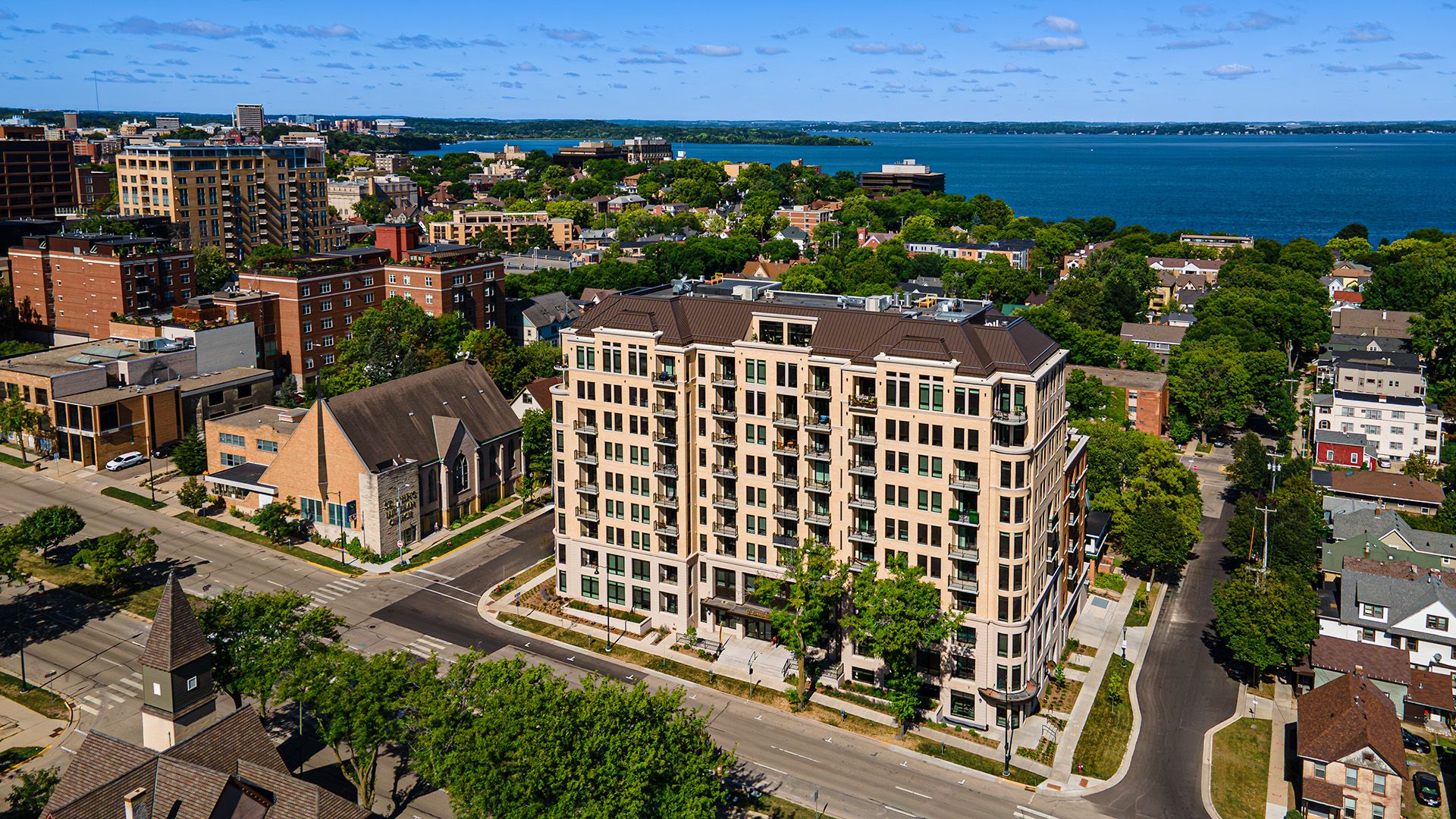
When The Continental launched its upscale downtown Madison property, the team made a deliberate choice. Connectivity would not operate as a resident-by-resident variable. It would be embedded into the foundation of the building.
Internet as Infrastructure, an Elevated Amenity in Multifamily Properties
Internet is often treated as a tenant-level expense. Tenants activate it individually, pay for it separately, and self-manage it.
But as technology advances, Internet connectivity powers far more than personal devices in units or in the office. It supports access control systems, smart thermostats, EV charging, cloud-based management platforms, and the growing ecosystem of connected technology throughout the property.
When structured intentionally, the Internet and Wi-Fi services can shift from a resident service to core building infrastructure. And, unlike other “utilities,” bulk Internet from SupraNet net is a fixed-cost, making it easy to budget for in rent prices.
And when done well, it becomes something more: an elevated, built-in amenity that enhances the resident experience from day one.
When The Continental launched its upscale downtown Madison property, the team made a deliberate choice. Connectivity would not operate as a resident-by-resident variable. It would be embedded into the foundation of the building.
They wanted a product and service that:
- Delivered a seamless, move-in-ready experience
- Ensured reliable connectivity for the residents and the building
- Provided a predictable, fixed per-unit cost for financial clarity
- Supported the building’s expanding technology ecosystem long into the future
Bulk fiber and building Wi-Fi wasn’t added as a perk. It was implemented as infrastructure that stabilizes operations while elevating the living experience.

Rethinking the Traditional Multifamily Internet Model for an Elevated Resident Experience
When properties operate under a traditional, resident-managed internet model, connectivity lives outside management’s control. Each resident selects a provider, schedules installation, and manages service independently.
That structure can work, but it introduces operational and experience variability at the tenant level, especially during peak move-in cycles.
Installation timing, service consistency, and onboarding experiences vary from unit to unit. For properties positioned in the higher-end market, that inconsistency can negatively impact an otherwise polished first impression.
Individual activation can mean:
- Inconvenient installation scheduling windows
- Delays during peak move-in seasons
- Inconsistent onboarding experiences
- Pricing structures that fluctuate by tenant
As Taylor Garstecki explained:
“We’ve heard of residents waiting weeks to get their Internet connected at other properties. That’s not how we wanted the move-in experience to be for residents of The Continental.”
For The Continental, the decision to go with SupraNet was about choosing a model that reduced variability and gave management greater control over the resident experience that aligned with the property’s elevated standards that includes a 1 Gig symmetrical fiber Internet connection to each unit.
You can see that The Continental is living up to the upscale standards they set out to achieve by their reviews.
Bulk Internet Fixed Costs Create Financial Clarity

Bulk fiber transformed the Internet from a fluctuating tenant expense into a predictable operating input. Instead of managing individual service variability, The Continental now operates with:
- A fixed per-unit cost
- Stable forecasting
- Simplified rate modeling
Unlike gas or electricity, which fluctuate monthly, bulk Internet provides a consistent baseline.
That predictability matters at the ownership level.
- It strengthens pro formas.
- It protects margins.
- It reduces administrative friction.
As Taylor noted:
“The Internet’s a fixed cost. So that’s really nice… to be able to make our rates around that.”
At the same time, the perceived value to residents significantly exceeds the cost basis.
“For what we’re paying per unit, some people are paying three to four times that for maybe one quarter of the speed.”
That dynamic enhances both leasing conversations and resident satisfaction — without introducing operational volatility.
The Infrastructure Decision: Fiber Built to Last with Managed Wi-Fi Services
When evaluating providers, the decision wasn’t centered on brand recognition. It was centered on infrastructure quality that will support technology changes in the future.
The Continental integrates modern prop-tech solutions, including:
- The Continental integrates modern prop-tech solutions, including:
- Keyless Bluetooth-based entry systems
- EV charging stations
- Smart thermostats
- Connected building systems
All of these rely on dependable connectivity and a properly managed Wi-Fi network.
SupraNet’s fiber backbone supports these systems by providing stable bandwidth across the property. Updates sync properly. Devices stay connected. Systems operate as designed.
As multifamily developments incorporate more smart technology, reliable Internet shifts from convenience to infrastructure.
Rather than implementing a wireless or other legacy systems that might require upgrades or reevaluation within a few years, they chose to install fiber from the outset.
As Taylor explained:
“We wanted something that would last many years, not something we’d have to revisit every two or three.”
By selecting fiber over legacy copper-based alternatives, The Continental invested in:
- Scalability as bandwidth demands increase
- Stability across a growing number of connected devices
- Long-term asset protection
- A backbone capable of supporting building-wide technology systems
This wasn’t just about delivering faster speeds to individual units. It was about installing infrastructure that could support the entire property — from resident streaming and remote work to smart building systems and future technology integrations.
The result is a network designed not only for today’s usage, but for tomorrow’s device density, automation platforms, and evolving digital expectations.
Multifamily Operational Impact: Stability by Design
Since implementation, SupraNet has delivered consistent performance through the fiber connection and the managed Wi-Fi network.
Service interruptions have been rare. When a citywide underground electrical fire affected multiple providers, the disruption was external and unavoidable. Outside of that isolated incident, uptime has remained steady.
More importantly, property management rarely needs to intervene.
Internet-related maintenance tickets typically involve router setup questions — not infrastructure failures. Once directed to SupraNet’s support team, issues resolve without escalation.
No repeat complaints.
No chronic disruption.
No operational drag.
As Taylor put it:
“There’s never been a situation where a resident said, ‘I’ve tried reaching out and they’re not fixing it.’ That says a lot.”
And perhaps the most telling metric of success:
“Honestly, I have to interact with them very minimally. That’s a great thing when it comes to Internet service.”
A Partnership Designed for the Long Term
SupraNet wasn’t automatically the most recognizable name in the evaluation process. As Taylor Garstecki shared, the company entered the conversation as something of a “dark horse” candidate, particularly compared to larger national providers.
But the decision wasn’t based solely on brand recognition. It was based on experience.
“SupraNet was a bit of a dark horse because of the size. But I had firsthand experience with the quality of the connection and the local customer service because I lived in an apartment with SupraNet Internet. I knew it was a better experience, and I wanted it for our residents.”
That first-hand familiarity gave the team confidence not just in the service level, but in the partnership model.
SupraNet offers the balance many properties look for: large enough to deliver robust fiber infrastructure, yet local enough to provide direct accountability and responsive support. That alignment reinforced the long-term strategy behind The Continental’s connectivity decision.
“It’s been a really good experience overall. I’m glad we made the push.” — Taylor Garstecki
The Outcome: Stability Today. Scalability Tomorrow.
By treating Internet as infrastructure rather than an amenity, The Continental achieved measurable advantages:
- Fixed, predictable per-unit costs
- Simplified budgeting and forecasting
- Reduced move-in friction
- Stronger brand positioning
- Reliable operational performance
- Scalable fiber ready for future demand
As bandwidth usage increases, smart systems expand, and resident expectations rise, The Continental remains prepared without restructuring its financial model or rebuilding its network.
That’s the difference between adding Internet…
…and architecting infrastructure.
If you’re interested in learning more about how SupraNet Bulk Fiber Internet can work for you: